
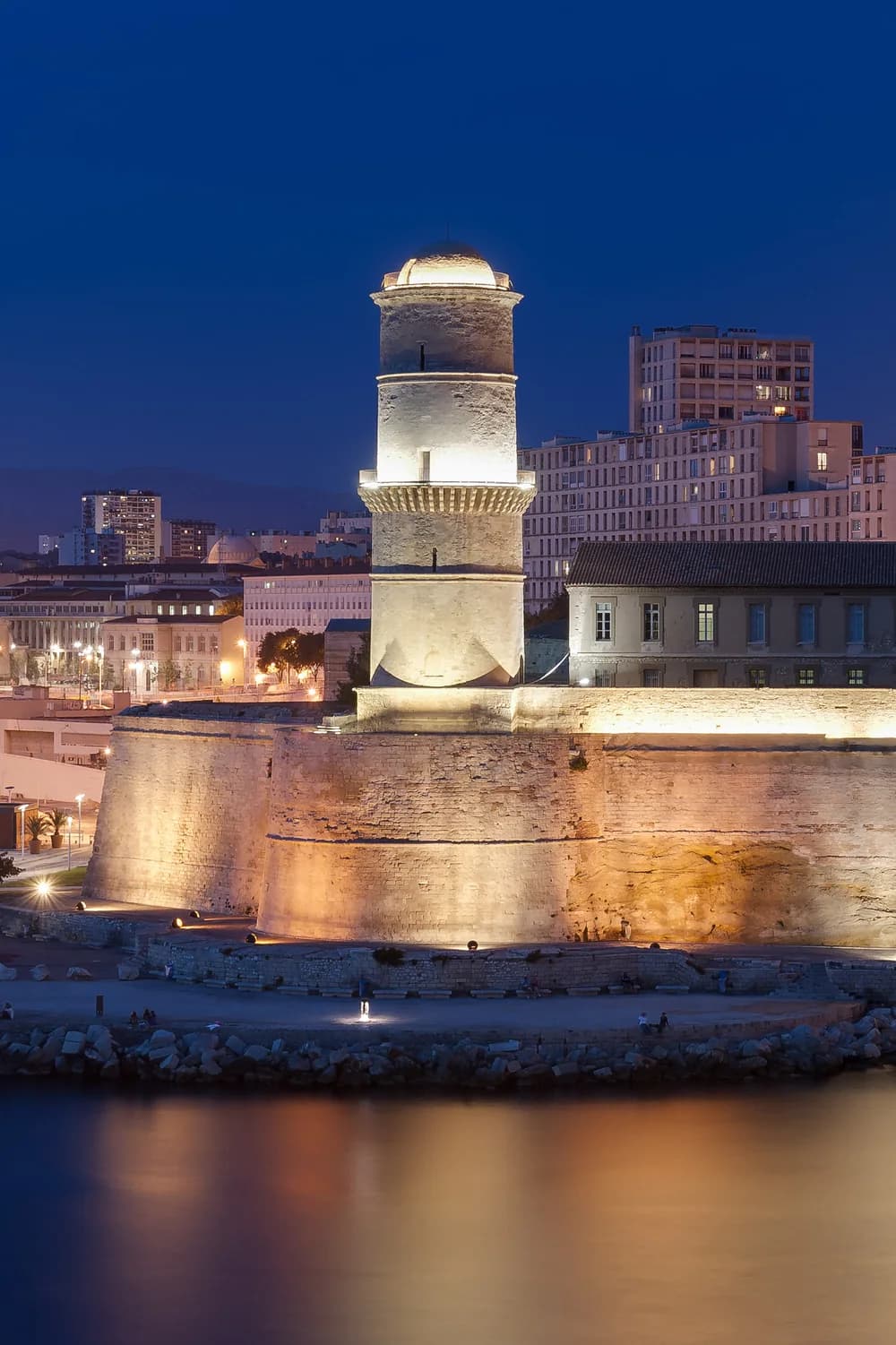
Old town centres given back to pedestrians
In Marseille as in Aix-en-Provence, the heart of town has closed to cars. In Aix, the bollards of the pedestrian zones have stayed raised permanently since 17 November 2014. In Marseille, the Opéra district and the lower Canebière, a stone’s throw from the Old Port, are automated pedestrian zones.
The principle is the same in both cities: the street belongs to pedestrians, parking is banned, and motor access is reserved for a few entitled users, at certain hours and for a limited time.
For a visitor, this translates simply: you arrive by car at the edge of the centre, then finish on foot. A drop-off point chosen in advance makes all the difference between a calm arrival and a few streets too many, suitcase in hand.
Marseille: the Opéra and the lower Canebière
The entrances to Marseille’s automated pedestrian zones are closed by anti-intrusion bollards. They are lowered for deliveries from Monday to Saturday from 6 to 10 am, and on Sunday from 8 to 10 am. Each bollard is linked to the City’s urban control centre, which can be reached through an online form.
Permanent access is reserved for owners or tenants of a garage inside the zone, residents holding a disability card, emergency and maintenance services, and hoteliers who run a valet service. In November 2024, the City counted 88 automatic bollards and around 1,000 manual ones.
Parking is banned. Stopping, with the driver on board or close by, is limited to 20 minutes; outside delivery hours, a vehicle may not stay more than 30 minutes in the zone.
If your hotel is in one of these districts, ask whether it offers a valet: it is often the simplest way to reach its door with your luggage. Otherwise, the drop-off takes place at the edge of the zone, and you finish on foot.
Sources: 2
The Old Port on event days
On certain days, the Old Port quays close to cars. For the Corrida du Vieux-Port, on 28 December 2025, traffic was stopped from 4 to 8 pm on part of the Quai du Port, the Quai des Belges and the Rue de la République, among other streets; emergency vehicles and those of the organisers could pass.
The City of Marseille publishes these closures on its website. Before a waterside appointment on a festive day, it is wise to check them, and to plan a drop-off slightly back from the quays.
The rest of the time, the Old Port is a natural meeting point. You still need to agree on a precise spot: its quays are long, and it is easy to miss each other.
Sources: 3
Aix-en-Provence: a centre behind bollards
In Aix, bollards restrict vehicle access permanently. Residents and entitled users enter with a badge, shown at an entry terminal that issues a ticket stating the time of arrival; delivery vehicles, from 6 am to 11.15 am, with a ticket and for 45 minutes at most; emergency services can always pass.
Parking is strictly banned. Stopping is tolerated just for the time needed to let passengers in or out, or to load and unload.
The pedestrian zones form many sectors, among them the historic sector, the Italie and Mignet sectors, the side lane of the Cours Mirabeau and the Rue Manuel.
An appointment in the old town is therefore prepared like a stroll: drop-off at the edge of the perimeter, a few steps through the lanes, pick-up at the same place or at the other end of town, at the agreed time.
Sources: 1
Summer: calanques, hills and the Route des Crêtes
From 1 June to 30 September, access to the forest areas of the Bouches-du-Rhône is regulated by prefectoral order. The danger level is published at around 6 pm for the following day, hill range by hill range.
At the green level, you may walk there all day. At the red level, access to the hills, including from the sea, travel within them and presence there are banned; a few public reception areas laid out in the forest may nevertheless remain open, barring exceptional risk. All year round, outside roads open to public traffic, motor vehicles may neither drive nor park there.
On the Marseille side, the roads to Sormiou, Morgiou and Callelongue close in summer to vehicles without a pass. In 2026, the measure applied from 7 am to 7 pm, from 5 to 7 June, every day from 12 June to 30 August, then at weekends until 27 September. Entitled users include cabin occupants and boat owners; the City invites everyone else to come by bus from the Rond-Point du Prado, by bicycle or by scooter. On red fire-risk days, access to these calanques is closed to everyone, at all hours.
Between Cassis and La Ciotat, the Route des Crêtes is closed to motor vehicles every Sunday of the year, and on red-risk days from 1 June to 30 September. On Sundays, it remains open to walkers and cyclists.
What a chauffeur does with these rules
None of these rules prevents you from enjoying Marseille or Aix. They move the point where the car stops, and call for a little anticipation: the bollards, the festive days, the risk level published the day before.
For a day with several stops, give your exact addresses, the time of your appointments and the name of your hotel. The chauffeur plans the drop-off as close as possible, a pick-up point that is easy to find, and a fallback route if a road is closed.
For an arrival at your hotel, say whether it is in a pedestrian zone and whether it offers a valet; for a dinner, the time you expect to leave; for a day towards the calanques, where you would like to walk. These details are what allow the chauffeur to be in the right place at the right time. A single day can thus link an appointment near the Canebière, lunch facing the Old Port and a late afternoon in the lanes of Aix, without having to look for a parking space.
You walk where the city asks you to, no more, and the rest of the time the city slips past the window.
To have a chauffeur by the hour or by the day, in Marseille as in Aix: Chauffeur by the hour