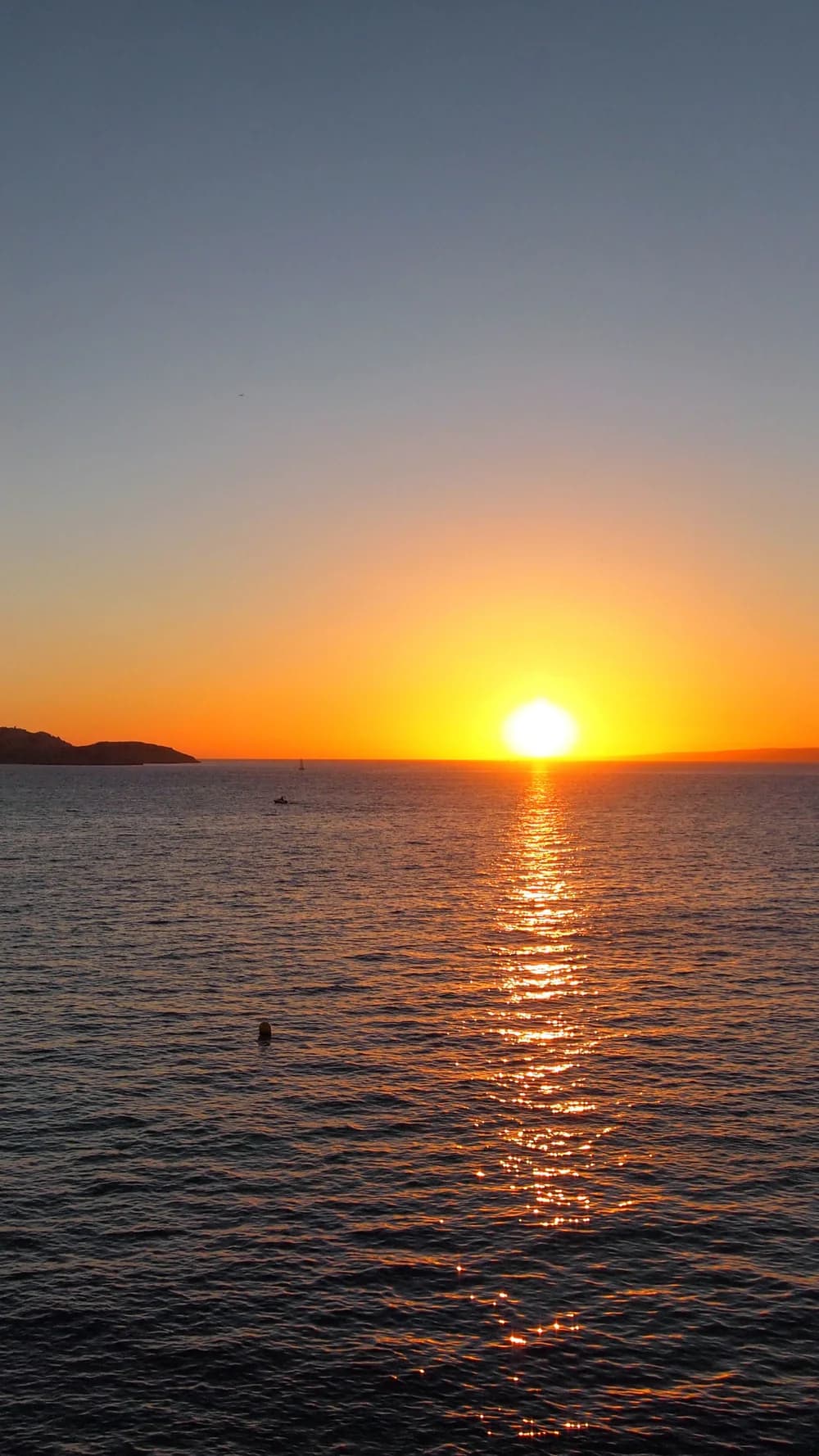
Opening photo: sunset over the sea from the Corniche in Marseille, in the Endoume district, not on the Côte Bleue.
L’Estaque, the painters’ village
L’Estaque, in Marseille’s 16th arrondissement, drew some ten renowned painters between 1860 and 1920. Cézanne explored shapes, lines and colours there from 1870; Braque stayed there from autumn 1906 and, in 1908, painted Houses at L’Estaque (Maisons à L’Estaque) in the Riaux district, regarded as a founding work of Cubism. They are its two major figures; Derain, Dufy, Marquet, Friesz, Macke, Renoir, Guigou and Monticelli also worked there, and most of them painted dozens of canvases on the spot.
The Marseille tourist office links the name of L’Estaque with Impressionism, Fauvism and Cubism. What held the painters: a viewpoint over the bay of Marseille, the horizontal line of the sea, the vertical factory chimneys, the curving hills and their ochres.
A painters’ trail follows in their footsteps, marked by eight enamelled lava panels; the walk takes about two hours. L’Estaque is also a departure point for sailing and pleasure boating, and in summer a boat links it to the Old Port. On the harbour, people taste panisses and chichis frégis, two specialities of the district.
People come for the light, and quickly understand why: in the morning, the harbour opens up like a painting.
A coast of small harbours, from Niolon to Carro
The Côte Bleue begins north of Marseille, after L’Estaque, and ends at Martigues. It runs through Le Rove, Ensuès-la-Redonne, Carry-le-Rouet and Sausset-les-Pins, as far as La Couronne and Carro.
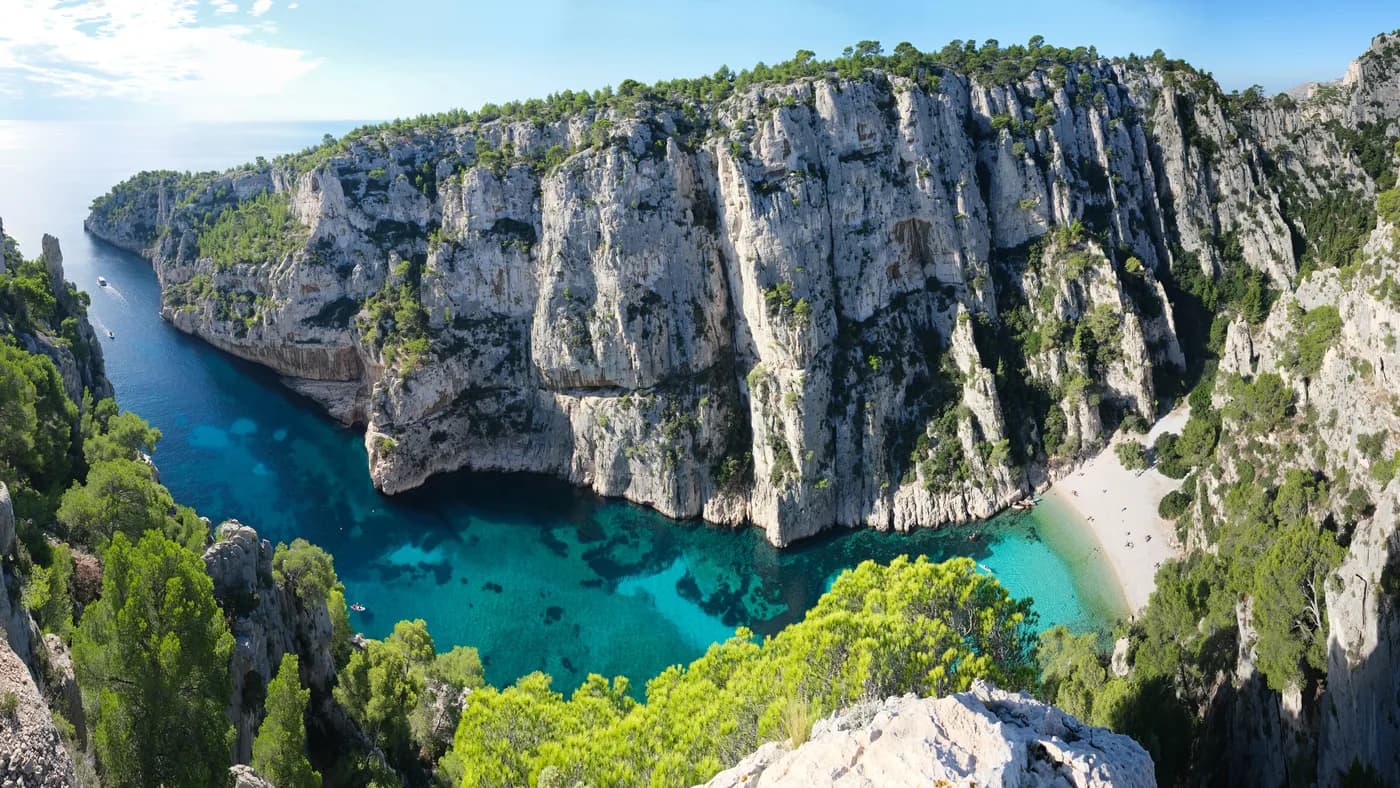
Its calanques are on a more intimate scale than those to the south. Niolon, in the commune of Le Rove, is sheltered from the wind, which makes it a favourite spot for diving, with an open view over the harbour of Marseille and the Frioul islands; offshore, old shipwrecks draw divers. A few restaurants stand there, including an inn with a large panoramic terrace. Méjean and La Redonne belong to Ensuès-la-Redonne; La Redonne has its small harbour, through which the road to Méjean passes.
Petit Méjean has a very picturesque harbour and a beach lined with pines and rocks; a restaurant open in season serves mainly fish, including a well-known fried fish dish. At Méjean, archaeological remains also bear witness to a prehistoric human presence.
Marcel Pagnol and Robert Guédiguian chose this coast as a filming location.
A marine park born in 1983
The Côte Bleue marine park looks after 43 kilometres of coastline, from the Anse des Laurons in the west to the Pointe de Corbières in the east, and the sea up to 6 nautical miles offshore. It works along five communes: Martigues, Sausset-les-Pins, Carry-le-Rouet, Ensuès-la-Redonne and Le Rove.
Its story begins in 1983, with the creation of the Côte Bleue regional marine park association, which became a public joint body in 2000. Since 1985, artificial reefs for production and protection have been placed along the coast, and in 2012 the park received the label of Specially Protected Area of Mediterranean Importance. Since 2009, it has also run the Côte Bleue Marine Natura 2000 site, entirely at sea, which covers nearly 19,000 hectares, up to 6 nautical miles offshore and 100 metres deep.
Two marine zones are fully protected. Off Carry-le-Rouet, 85 hectares between the port of Carry and the Anse du Rouet, protected since December 1982; at Cap-Couronne, 210 hectares created in 1996 at the request of the professional fishermen of Martigues.
In these reserves, all fishing is banned, as are scuba diving, anchoring and navigation by any craft with a combustion or electric engine. You pass them offshore, and simply look. All along the coast, the protected Posidonia seagrass forms genuine underwater meadows.
The Côte Bleue railway and the customs officers’ path
The Marseille-Miramas railway line hugs the coast. Built between 1907 and 1915 by the engineer Paul Séjourné, it strings together viaducts, tunnels and sheer cliffs.
Several calanques have their own station: at Niolon, walkers step off the train to take the footpath.
The customs officers’ path, waymarked GR 51, links the calanques together, and several stations on the line give access to it. From Niolon to Ensuès-la-Redonne, the tourist office counts about three hours of walking, with a few difficult sections, and at least one and a half litres of water per person.
In winter, the coast has its rituals: on Sundays in February, the oursinades of Carry-le-Rouet and Sausset-les-Pins bring people together around sea urchins.
Going by car: what changes in summer
In summer, the road is what becomes difficult. At Niolon, motor vehicle access is regulated during the summer season, and parking is difficult and limited; the tourist office advises checking with the town hall of Le Rove.
For Méjean, you go through the harbour of La Redonne, then along a one-and-a-half-kilometre road beside the railway. The car park at the end of the calanque is tiny, and from April to September, motor vehicle access there is restricted from 9 am to 7 pm.
From 1 June to 30 September, access to the forest areas of the Bouches-du-Rhône also depends on the fire risk, published at around 6 pm for the next day. The tourist office recommends checking footpath access every day in summer.
Out of season, the roads are quieter and the coast reveals itself differently, in a softer winter light. In summer, a chauffeur really makes sense: dropping you as close as possible, leaving without looking for a space, and returning at the agreed time, while the day goes by at the water’s edge.
A day on the Côte Bleue
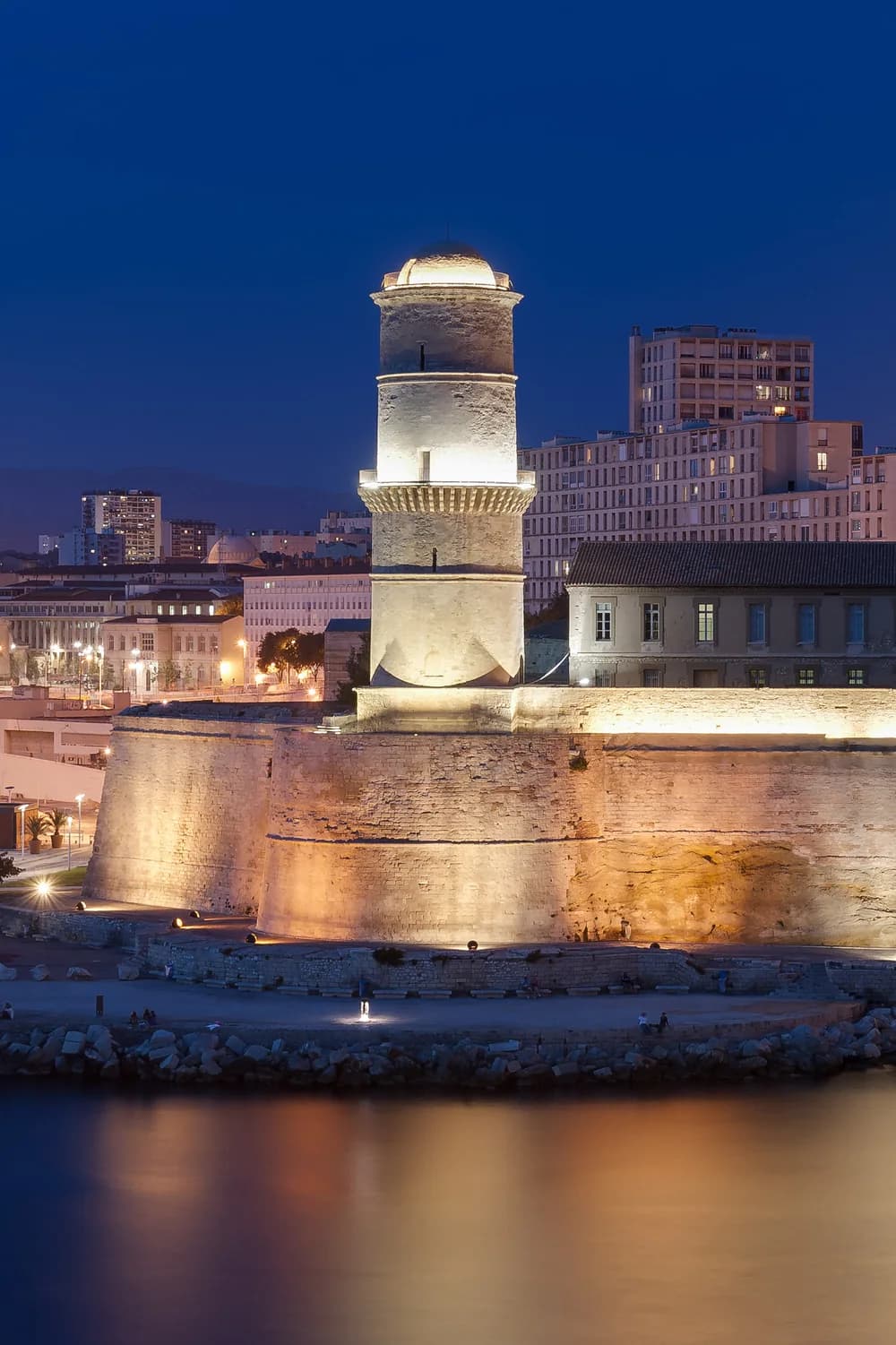
One possible day: in the morning, the painters’ trail at L’Estaque; at noon, a fish lunch at Petit Méjean, when the restaurant is open; in the afternoon, the Niolon calanque, or a boat trip along the coast. In the evening, the light settles over the harbour of Marseille.
For painting lovers, L’Estaque can fill a whole morning: the painters’ trail, then a pause at the harbour facing the bay, with a few panisses, before following the coast westwards. For walkers, the train makes it possible to set off from one calanque and come back from another, while the chauffeur waits at the agreed point.
There is no need to see everything. Two stops are enough to feel the character of this coast, rougher and more discreet than the one to the south, and to understand why the painters kept coming back.
For a day at your own pace on the Côte Bleue, with a chauffeur at your disposal: Chauffeur by the hour